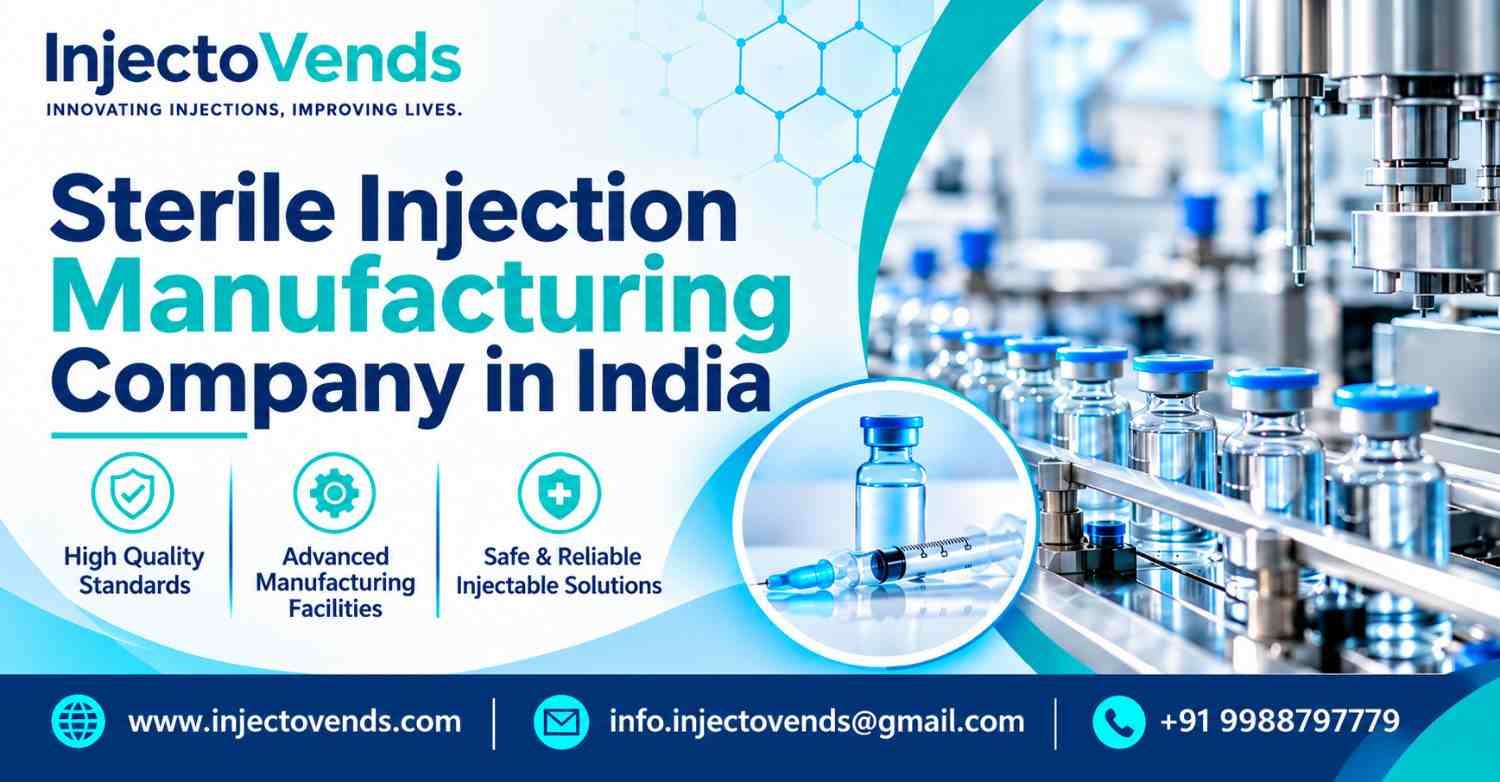
If you want to choose a reliable sterile injection manufacturing company in India, you must verify that the firm has passed thorough cleanroom validation, batch consistency & regulatory records. Thus, pharmaceutical marketers prefer partners who comply with Revised Schedule M and WHO-GMP requirements. The domestic injectable market in India produces revenues over ₹165,000 crore from hospital and critical care demand each year.
Decision makers should thus confirm Grade A aseptic filling lines, endotoxin controls & stability data before signing contracts. Proper documentation in case of batch release ensures the safety of the patient and good reputation of the company. Further, correct rupee pricing enables companies to launch their products within manufacturing costs that range from ₹6 lakh to ₹48 lakh. Proper aseptic techniques finally convert clinical demand into hospital supply. For more information contact us today on +91 9988797779.
Explore a Range of Sterile Injectable Products for Your Healthcare Facility
Hospitals and trauma centers rely on sterile injectable products for quick relief from acute and chronic ailments. Different formulation capabilities help pharma brands to grow across clinical departments.
- Liquid vials include a wide range of antibiotics, analgesics & emergency care drugs.
- Lyophilized dry powders for heat-sensitive compounds needing long shelf stability.
- Borosilicate glass ampoules designed for single-dose clinic and surgical use.
- Prefilled syringes ready for use for accurate dosage and speedier bedside preparation.
- Large-volume parenteral infusions providing necessary hydration, electrolyte & nutritional support.
- Manufacture of specialty oncology and hormone injectables in separate containment zones.
With assured sterile injectable contract manufacturing of injectable preparations, it is possible to supply a complicated line of parenterals without the necessity of investing in plant building.
Why Opt for Quality Sterile Injection Manufacturing at Injectovends?
Strict Control of Cleanroom Air Quality
At Injectovends, positive pressure cascades, HEPA filtration & continual particle monitoring are maintained in the aseptic filling rooms. Operators are also taught gowning and sanitizing practices to be followed before each shift. This implies that each batch of products is shielded from airborne microbes and cross-contamination risks.
Complete Batch Release Testing
All injectable lots are subjected to stringent sterility, bacterial endotoxin & sub-visible particle examinations in specialist laboratories. Also, analytical chemists verify active potency and pH stability prior to finished products being released. That means pharma partners obtain comprehensive Certificates of Analysis with every commercial shipment from a trusted sterile injection manufacturing company in India.
Transparent Rupee Cost Structure
The production cost estimates are explicitly itemized & are often between ₹8 lakh to ₹45 lakh per campaign. In addition, detailed quotations include active substances, main glass packing, sterilization cycles & secondary cartons. This means brands can compute net margins and bid without hidden fees when working with leading sterile injection manufacturers in India.
Schedule M Readiness Complete Revised
Quality assurance teams keep records of traceable batch manufacturing, calibration logs & vendor certification files. Moreover, digital audit trails also help in regulatory inspections and institutional hospital empanelment. This means fewer compliance delays for marketing businesses when registering products at the state and national level with third party sterile injection manufacturers in India.
Integrated Raw Material Scheduling
Filling slot confirmations are used by procurement professionals to coordinate the supply of active ingredients, vial depyrogenation and stopper sterilization. In addition, buffer inventory planning eliminates abrupt delays caused by imported excipient shortages. This helps ensure uninterrupted stock with distributors when hospitals are at their highest demand during monsoon and winter.
How Injectovends Supports Consistent Injectable Production With State-of-the-Art Manufacturing Facilities
A trusted sterile injection manufacturing company in India blends segregated cleanroom design with automated inspection technologies. Here’s how core facility infrastructure enables commercial reliability:
| Facility Pillar | Operational Capability | Business Benefit | Typical Cost / Scale Situation |
|---|---|---|---|
| Aseptic Filling Core | Grade A laminar flow cabinets in a Grade B backdrop | Prevents microbiological entry during open-vial filling | The cleanrooms’ improvements generally cost between ₹3 crore and ₹18 crore |
| Water and Steam Utilities | Multi-column distillation for clean steam and WFI (Water for Injection) | Ensures sanitation of equipment and pyrogen-free solvents | Automatic daily check of conductivity and TOC |
| Automatic Packaging Line | Tunnel sterilization, crimping, optical inspection, high-speed vial washing | Consistent fill volumes and leakproof sealing | Commercial batch runs between ₹10 lakh and ₹65 lakh+ |
| Stability & Micro Labs | Walk-in stability chambers, HPLC systems and sterility isolators | Validates claims of shelf life and conformity with pharmacopeias | Testing required before commercial release |
Build Your Pharma Business with Sterile Injectable Contract Manufacturing Know-How
Strategic Portfolio Planning for Molecules
Emerging pharma companies are targeting high-turnover hospital compounds for early prescriptions by key opinion leaders in critical care. Additionally, combining core anti-infectives with specialist injectables protects income from seasonal swings. This allows enterprises to create robust product portfolios through sterile injectable contract manufacturing that respond to local illness trends.
Precision Artwork and Compliance of Cartons
Regulatory specialists verify carton text, batch coding and tamper-evident seals to current Indian labeling regulations. Standardized digital proof approvals also remove the guesswork from print and avoid costly printing errors before any commercial packaging runs. Therefore, completed injectables from a sterile injection manufacturing company in India are not administratively rejected at the hospital pharmacy during receipt checks.
Logistics Cold-Chain Readiness, Pan-India
Brands can tie up with existing sterile injection manufacturers in India to concurrently serve metro corporate hospitals and district nursing homes. Insulated shippers are also proven to safeguard temperature-sensitive vials on extended transit routes. Hence, the distributors enhance their geographical presence without compromising the medicinal efficacy.
Flexible Batch Size for Market Launch
By collaborating with third party sterile injection manufacturers in India, marketers can gauge the local demand among doctors through small batches. Then manufacturing slots scale seamlessly when hospital tenders and repeat prescriptions speed up. This allows enterprises to maintain working capital when they are first expanding into an area.
Continued Prescriber and Hospital Confidence
Consistent therapeutic performance builds long-term confidence with intensivists, surgeons and hospital procurement committees. Besides, assured batch availability enhances the vendor ratings under the yearly institutional rate contracts. Reliability over time from top third party sterile injection manufacturers in India converts one-off trial purchases into repeat multi-year supply contracts.
The Final Word
Finding the best sterile injection manufacturing company in India is closely connected to product safety, audit readiness and long-term profitability. Also, pharma brands that partner with Injectovends get clear ₹-based budgeting, certified cleanrooms & guaranteed injectable supplies.
Common Questions
Q.1 What documents establish the regulatory status of a sterile plant?
Ans. Before signing the agreements, please review the validity of WHO-GMP certifications, compliance reports of Revised Schedule M & the latest environmental monitoring summaries.
Q.2 How much funding does a first injectable batch need?
Ans. Initial commercial runs are often between ₹6 lakh and ₹25 lakh, depending on the cost of the molecule, vial size & amount of orders.
Q.3 Why do critical care units like lyophilized vials?
Ans. Freeze-drying of unstable medications eliminates moisture, prolonging their room-temperature shelf life and maintaining efficacy until reconstitution at the bedside.
Q.4 Testing glass ampoules for tiny leaks
Ans. All ampoules are tested for leaks, using an automated high-voltage leak detection or a vacuum dye ingress test, to prevent contamination during storage.
Q.5 Why is depyrogenation an important step in the manufacture of vials?
Ans. Empty glass vials are sterilized to kill bacterial endotoxins in high-temperature dry-heat tunnels before sterile liquid filling is started.
Q.6 Can regional companies’ drug marketers feed government hospital tenders?
Ans. Yes, provided their manufacturing partner has valid WHO-GMP certification, 3-year batch stability data & relevant testing permits.
Q.7 Why is the container closure integrity test for vials important?
Ans. Correct compression of the rubber stopper and crimping of the metal prevents the intrusion of oxygen and microbiological contamination during transit.
Q.8 How fast can a new injectable brand be launched?
Ans. Standard products are typically launched forty-five to seventy-five days following trademark clearance, artwork approval & raw material testing.
Q.9 What is the difference between Purified Water and Water for Injection?
Ans. Water for Injection is distilled and has very tight limitations on endotoxins, so it may be safely given directly into a vein.
Q.10 How should you store common liquid injectables?
Ans. Store common liquid injectables in a cool, dry place away from direct sunlight and extreme temperatures. Maintain the cartons at below 25 degrees Celsius and away from direct sunshine. Use calibrated data recorders in warehouse areas.